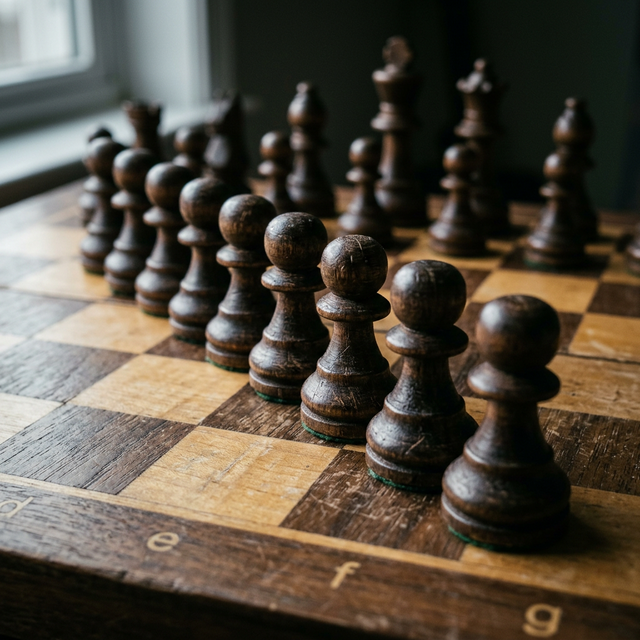
"Pawns are the soul of chess."
This incredibly famous, historically profound quote, uttered centuries ago by the great classical chess master François-André Danican Philidor, perfectly encapsulates a fundamental, undeniable truth that forever separates true chess masters from stumbling, casual club players.
A total beginner or intermediate player looks at the chessboard and naturally, intuitively sees the leaping Knights, the sniping Bishops, the heavy Rooks, and the wildly powerful Queen as the undisputed stars of the show, while regrettably viewing pawns as mere, annoying structural roadblocks that get in the way of their pieces. A grandmaster, however, looks at the exact same chessboard and immediately, profoundly sees the underlying pawn structure as the permanent, unchangeable, physical landscape of the battlefield upon which the entire war must be inevitably fought.
Because pawns mathematically cannot move backward under any circumstance, their sheer positioning dictates the permanent or semi-permanent, unyielding features of the entire position. They loudly and clearly tell you exactly where your pieces belong optimally, precisely where the open attacking lines are located, and ultimately, what your grand, overarching middlegame strategic plan should absolutely be.
If you are currently playing chess by randomly moving pieces around the board without actively consulting the pawn structure first, you are practically driving a car blindfolded. In this highly technical, expansive masterclass, we will surgically dissect and rigorously explore the most common, fundamental pawn structures that arise in competitive chess, and the definitive, non-negotiable strategic plans they strictly demand from the players.
Part 1: Why Do Pawn Structures Actually Matter So Much?
Imagine for a moment trying to enthusiastically drive a high-end, heavily modified sports car through a dense, muddy, heavily overgrown forest. The sports car is incredibly powerful, exceptionally fast, and valuable, but the rough, impassable terrain makes it completely and utterly useless. It cannot accelerate. It is trapped.
The exact, painful dynamic applies directly to chess pieces. A Knight is a phenomenally powerful, tricky attacking piece, but if there are absolutely no permanent central "outposts" (highly secure, unattackable squares deep in enemy territory guarded by your own pawn) for it to safely anchor itself, it simply gets pushed around mercilessly by enemy pawns until it is forced to retreat to its starting square in shame.
Similarly, a Bishop is theoretically a terrifying, long-range sniper capable of controlling the board, but if the massive pawn structure in the center of the board is completely, hopelessly locked into a solid wall, that Bishop uselessly bites on solid granite. It becomes a "bad" Bishop—a glorified, tall pawn.
By deeply, consciously understanding the precise pawn structure, you are effectively, literally reading the topographical "terrain map" of the board. The pawns tell you where the mountains are, where the open rivers flow, and where the narrow, dangerous valleys lie. If you learn to read the map, formulating a brilliantly winning plan becomes almost automatic and effortless. Let's look at the cornerstone structures.
Part 2: Structure 1 - The Dynamic Isolated Queen's Pawn (IQP)
The incredibly complex, highly theoretical "Isolated Queen's Pawn" (commonly referred to as the IQP) arises consistently and inevitably in countless popular openings, including the solid Caro-Kann Defense, the robust Queen's Gambit, the incredibly sharp Sicilian Alapin, and the dynamic French Defense (Tarrasch Variation).
An IQP fundamentally occurs when one player strategically possesses a pawn proudly sitting on the d-file (usually on d4 for White or d5 for Black), but has absolutely no friendly pawns remaining on the adjacent c-file or e-file to physically and securely defend it from enemy attacks.
d4.
The Plight and Promise of the IQP Player
The player intentionally playing with the immense responsibility of the IQP possesses a highly dynamic, incredibly temporary advantage. The d4 pawn powerfully controls vital, central squares (specifically e5 and c5 for White), practically providing natural, majestic, unassailable outposts for their Knights to land on. Furthermore, the utter lack of adjacent pawns automatically creates beautifully open c- and e-files for their heavy Rooks to quickly slide onto and dominate.
The Uncompromising Plan: Attack violently, and attack quickly! The IQP player MUST, under all circumstances, ruthlessly use their immense vertical and diagonal piece activity to rapidly launch a brutal, unyielding Kingside checkmating attack upon the opponent's castled King, or dynamically force a massive central breakthrough (often by aggressively sacrificing the IQP by pushing d5!). If the game slowly, agonizingly drags on without an attack, the IQP player is highly likely to lose the endgame.
The Defensive Squeeze Against the IQP
The player defensively playing against the IQP possesses a heavily static, massive, long-term strategic advantage. An isolated pawn is inherently, structurally weak and annoying because it constantly, pathetically requires massive amounts of valuable piece activity just to defend it from capture.
The Suffocating Plan: Blockade the pawn tightly with iron. The defender must methodically place an unmovable piece (almost always a beautiful Knight) directly in front of the IQP on the d5 square, firmly preventing it from ever moving forward. Then, the defender must systematically, ruthlessly trade off all of the opponent's minor attacking pieces to entirely completely defuse their attacking potential. Finally, they will smoothly transition the game into a simplified, trivially won endgame where they comfortably surround the weak, paralyzed pawn with their King and Rooks, capture it, and push their own pawns to victory.
Part 3: Structure 2 - The Immovable Pawn Chain (The French Structure)
When pawns violently lock horns diagonally in the very center of the board, completely blocking each other from moving, they majestically form a permanent "Pawn Chain." This highly restrictive, suffocating structure frequently, famously occurs in the deep theories of the French Defense, the King's Indian Defense, and the Advance Variation of the Caro-Kann.
The Golden, Unbreakable Rule of Pawn Chains
The legendary theoretician and chess author Aron Nimzowitsch historically gave us the absolute, definitive, and unshakeable blueprint for destroying pawn chains: You must absolutely always, without exception, aggressively attack a pawn chain at its fundamental base.
In the locked structure pictured above, White's impressive, space-grabbing pawn chain consists of the pawns firmly on d4 and e5. The vulnerable "base" of this immense chain is the d4 pawn, because it is the only pawn that currently physically supports the hyper-advanced e5 pawn.
Black MUST ruthlessly attack this base with aggressive, undermining moves like ...c5, subsequently bringing their Knight to ...Nc6, and aggressively placing their Queen on ...Qb6, heavily pressuring d4. If Black successfully shatters the d4 base, the e5 pawn hopelessly collapses, and White's entire massive center crumbles into dust.
White, conversely, must completely ignore Black's pressure and will rapidly seek to systematically attack Black's chain base (the e6 pawn), or rapidly launch a brutal, checkmating assault entirely on the Kingside, precisely where their own pawn chain is inherently, geometrically "pointing" its massive firepower.
Part 4: Structure 3 - The Asymmetric Carlsbad Structure
The highly strategic, complex Carlsbad structure typically arises primarily from the immensely popular Exchange Variation of the incredibly solid Queen's Gambit. It is a highly asymmetrical, heavily imbalanced pawn structure that beautifully and clearly defines the grand plans for both sides for the entirety of the long game.
a2, b2, and d4, directly facing off against Black's massive, solid wall of pawns on a7, b7, c6, and d5.
White's Master Plan: The Intimidating Minority Attack
In the rigid Carlsbad structure, White generally completely lacks a straightforward, explosive central break. Instead, White methodically and famously launches a heavily theoretical Minority Attack exclusively on the queenside.
The brilliant logic is simple: White has two pawns (a and b) aggressively marching forward to physically attack Black's three defending pawns (a, b, and c). By forcefully pushing the a and b pawns to clash heavily against b5 or c6, White violently aims to trade off pawns forcefully. The ultimate, absolute goal is to permanently create an exploitable, fatal weakness in Black's camp—such as leaving Black with an isolated, weak d5 pawn or a hopelessly backward, un-defendable c6 pawn that can be gobbled up later.
Black's Counter-Plan: Furious Kingside Play or a Central Break
Knowing White is slowly, methodically coming for them on the queenside, Black must urgently and furiously generate dynamic counterplay elsewhere on the board. This usually beautifully takes the violent form of forcefully planting a powerful Knight squarely on the central e4 outpost, launching pieces toward White's castled King, or painstakingly preparing the massive ...e5 central pawn break to aggressively challenge the very center of the board directly before White's suffocating queenside pressure becomes mathematically unbearable.
Part 5: Structure 4 - The Treacherous Hanging Pawns
Hanging pawns are a precarious, terrifying pair of adjacent, friendly pawns sitting proudly on the 4th rank (almost always the c and d pawns) that are completely and utterly statically separated from all other friendly pawns on the board. They very frequently, seamlessly evolve directly out of an IQP structure when a minor piece is aggressively traded on an adjacent, highly contested square.
Exactly like the incredibly dynamic IQP, possessing Hanging Pawns miraculously grants massive, suffocating central control and immense, sweeping space for your pieces, but conversely, they represent a constant, glaring structural weakness that requires absolute, unceasing piece protection. They are a massive double-edged sword.
The Hanging Pawn Plan: The player armed with Hanging Pawns must fiercely maintain the terrifying tension in the center of the board. They must wait for the absolute perfect, violently tactical moment to aggressively push one of them forward to explosively create an unstoppable passed pawn, definitively open deadly attacking lines, and strictly avoid all piece trades. The defending opponent must desperately strive to mathematically blockade the pawns dynamically and agonizingly trade down material to reach an endgame where the Hanging Pawns become a massive, tragic, fatal liability that simply falls off the board.
Conclusion: Listen to the Soul of the Board
The next time you play a serious game of chess, aggressively force yourself to mentally pause before you randomly touch a Knight or a Bishop. Brutally ask yourself: "What exact strategic message is the permanent pawn structure shouting at me to do?"
Are the vast pawn chains hopelessly locked together? Immediately look for tactical, undermining pawn breaks on the flanks and maneuver your minor pieces carefully to support them. Is the absolute center wide open and fluid? Violently maximize your piece activity and aggressively target enemy positional weaknesses before they can aggressively consolidate. By carefully, methodically listening to the literal structural soul of the board, your grand strategic plans will rapidly and permanently elevate from mindless, aimless shuffling to beautiful, masterful execution.
Next in our extensive, highly deep strategic series, we dramatically scale the incredibly steep strategic ladder even further, peering into the minds of International Masters: Play By Deep Imbalances Like an Absolute Master. Prepare to radically change how you visually see the 64 squares!
Stay deeply tuned, keep calculating, and respect your pawns!